
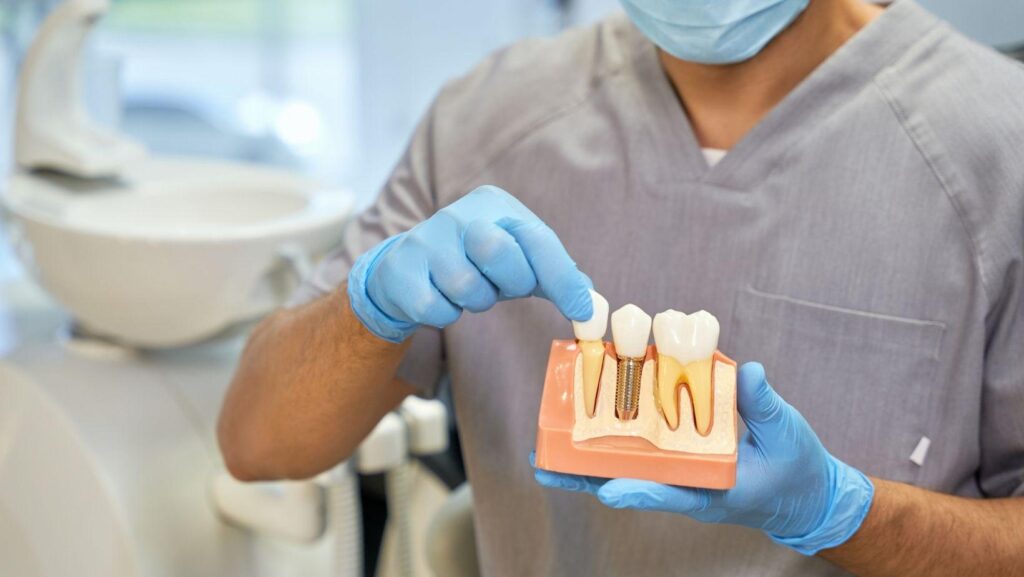
All-on-4 may suit you if you have extensive tooth loss or failing teeth and want a fixed full-arch restoration supported by four implants. If you’re researching all on 4 dental implants in Pittsfield, MA, a consultation is the best way to find out whether you meet these criteria.
You may qualify if you have adequate jawbone support, healthy or manageable gums, and overall health that allows implant surgery.
Bone density affects where and how implants can anchor, but limited bone does not always rule out treatment.
Your dentist or specialist will use dental imaging, medical history, gum evaluation, and bite assessment to determine whether All-on-4 fits your needs.
Health conditions, smoking, oral hygiene, medications, and healing capacity can affect eligibility and timing.
A thorough evaluation can also identify alternatives, such as bone grafting, conventional implants, or other restorations, if All-on-4 does not provide the safest option.
How All-on-4 Treatment Works
All-on-4 uses four implants to support a complete fixed dental arch.
Your treatment plan depends on your jawbone anatomy, health history, bite, and ability to heal properly.
Implant Placement Strategy
Your dentist or oral surgeon uses 3D imaging, usually a CBCT scan, to evaluate bone volume, nerve pathways, sinus position, and the locations of remaining teeth.
This information guides implant placement and helps determine whether All-on-4 suits your anatomy.
Typically, two implants sit near the front of the jaw, where bone often remains stronger.
Two implants sit toward the back and may be angled to use available bone while avoiding structures such as the lower-jaw nerve or upper-jaw sinus.
Angling the posterior implants can reduce the need for extensive grafting, but it does not eliminate that need in every case.
The team removes teeth that cannot be saved and places the implants during the planned surgical appointment.
Your medical conditions, medications, smoking status, and bone quality can affect timing, stability, and healing.
Role of Immediate Fixed Teeth
If your implants achieve adequate initial stability, your dentist may attach a temporary fixed arch soon after surgery.
This restoration lets you leave with teeth that remain secured to the implants, rather than relying on a removable denture during early healing.
You still need to protect the implants while bone integrates with their surfaces.
Your care team may recommend a soft-food diet, careful cleaning, and limits on biting force during this period.
A temporary arch also allows the dentist to assess your bite, speech, comfort, and appearance.
After healing, you receive a final restoration made from materials selected for strength, appearance, and maintenance needs.
Immediate fixed teeth are not guaranteed; insufficient stability, medical concerns, or complex bone conditions may require delayed loading.
Bone Density and Jawbone Requirements
All-on-4 treatment depends on enough healthy jawbone to stabilize four strategically placed implants.
Your dental team uses a 3D cone-beam CT scan, medical history, and clinical examination to assess bone volume, density, and the need for additional treatment.
Available Bone Volume
You need sufficient bone height, width, and quality in the planned implant locations.
The All-on-4 technique often uses the denser bone toward the front of the upper or lower jaw, which can make treatment possible despite moderate bone loss in other areas.
Your dentist evaluates:
- Bone width: Enough thickness must surround each implant.
- Bone height: The implant must avoid structures such as the sinus or lower-jaw nerve.
- Bone density: The bone must provide initial stability and support integration.
- Remaining teeth and infection: Severe infection or damaged roots may require treatment before placement.
A scan can also reveal hidden bone defects that a standard dental X-ray may miss.
Bone loss does not automatically exclude you, but extensive resorption, poor bone quality, or inadequate front-jaw support may require another treatment plan.
When Bone Grafting May Be Needed
All-on-4 may reduce the need for grafting because your dentist can angle the rear implants and use areas with stronger remaining bone.
However, you may still need bone augmentation if you lack adequate support for implant stability or if an infection has damaged the surrounding tissue.
Grafting becomes more likely when you have:
- Severe bone loss across the proposed implant sites
- Insufficient bone width for the implant diameter
- Major defects caused by trauma, infection, or extraction
- Inadequate bone near the front of the jaw
- Sinus limitations that affect upper-jaw placement
Your provider may recommend a graft before implant placement, use a different full-arch design, or consider other restorative options.
Smoking, uncontrolled diabetes, and untreated gum disease can also impair healing, so your dental team may address these issues before surgery.
Health Factors That Affect Eligibility
Your eligibility depends on infection control, medical stability, medication effects, smoking status, and your ability to heal and maintain the implants.
Treating active problems and coordinating care with your physicians can improve safety and may make treatment possible.
Gum Disease and Oral Infections
Active gum disease, untreated cavities, abscesses, or other oral infections can interfere with implant treatment.
Bacteria and inflammation may damage the tissues that support implants and increase the risk of implant failure.
Your dentist or periodontist may need to treat these conditions before surgery.
Your evaluation may include a periodontal examination, dental X-rays, and a 3D scan.
The clinician will assess bleeding, gum pockets, bone loss, drainage, and oral hygiene.
You may need deep cleaning, tooth removal, infection treatment, or periodontal therapy before implant placement.
You also need a practical daily-care routine.
An All-on-4 prosthesis requires regular brushing and cleaning beneath the bridge with tools such as floss threaders, interdental brushes, or a water flosser if recommended.
Medical Conditions and Medication Use
Uncontrolled diabetes can slow wound healing and increase infection risk.
Your dental team may request recent blood-glucose or A1C results and coordinate with your physician before surgery.
Well-managed diabetes does not automatically exclude you, but poor control may require treatment first.
Other factors include immune disorders, previous radiation to the jaw, bleeding problems, significant heart disease, and conditions that affect bone metabolism.
Tell your provider about every diagnosis, supplement, and medication, including blood thinners, corticosteroids, and osteoporosis drugs.
Do not stop medication without medical guidance.
Your clinician will review whether you can safely undergo anesthesia, surgery, and follow-up care.
Medication changes or additional medical clearance may be necessary.
Smoking and Healing Capacity
Smoking and nicotine use reduce blood flow and expose healing tissues to chemicals that can impair recovery.
They also raise the risk of infection, delayed healing, and problems around implants.
Vaping and smokeless tobacco may also affect healing, so disclose all nicotine use accurately.
Your provider may require you to stop smoking before surgery and during the healing period.
The exact timeframe varies according to your health, procedure, and clinician’s protocol.
Some practices may decline treatment if you cannot stop.
Your healing capacity also depends on nutrition, sleep, oral hygiene, and reliable attendance at follow-up visits.
Your team may recommend nicotine cessation support and address nutritional or medical problems before setting a surgical date.
Clinical Evaluation and Alternative Options
Your evaluation should establish whether your bone, gums, bite, and general health can support fixed full-arch implants.
Three-dimensional imaging and a review of alternatives help your dental team match treatment to your anatomy, medical risks, budget, and long-term maintenance needs.
Diagnostic Imaging and Treatment Planning
Your clinician typically uses a CBCT scan to measure available bone and examine the position of the maxillary sinus, nasal cavity, and the inferior alveolar nerve.
The scan also helps identify infection, hidden pathology, severe bone defects, and areas where angled implants may be possible.
Your examination should include gum health, remaining teeth, jaw relationships, bite forces, oral hygiene, and the condition of your existing dentures or restorations.
Your dentist should also review diabetes control, smoking or nicotine use, medications such as bisphosphonates, and previous radiation treatment.
Treatment planning should define whether you need extractions, infection control, bone grafting, or temporary teeth.
You should receive a clear explanation of implant positions, the provisional and final prostheses, expected healing, maintenance visits, risks, and alternative treatments.
When Other Implant Approaches May Be Recommended
Your clinician may recommend more than four implants per arch when your bite produces high forces or your bone allows additional support. Your prosthetic design may also require improved stability.
A conventional implant bridge may suit you if you have several healthy teeth. It is also an option if you have enough bone to place implants in a distributed pattern.
Bone grafting or sinus augmentation may be considered when vertical or horizontal bone volume limits implant placement. These procedures can extend treatment time.
They may not suit you if uncontrolled medical conditions, heavy smoking, or certain medications increase surgical risk.
A removable implant-supported overdenture may offer easier cleaning and lower treatment complexity than a fixed full-arch restoration. Conventional dentures remain an option when surgery is unsuitable or you prefer to avoid implants.