
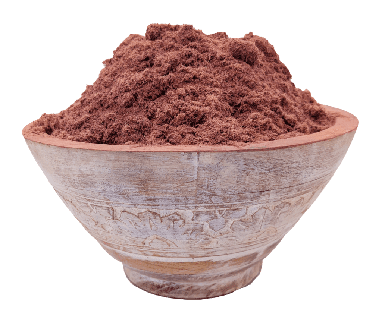
Plant materials can change considerably between their natural state and their final dried form. A root develops within a specific soil environment, accumulates structural tissues as it matures, and responds to seasonal conditions. Once harvested, drying and mechanical processing introduce another series of physical changes.
The term Mimosa bark can refer broadly to bark associated with plants in the Mimosa genus. In discussions involving Mimosa tenuiflora, it is often connected with the historical botanical name Mimosa hostilis. Understanding the material properly requires attention to botanical classification, root anatomy, processing stages, environmental factors, and storage rather than appearance alone.
The Botanical Source at a Glance
Mimosa tenuiflora is a woody member of the Fabaceae family. It belongs to the Mimosa genus and is naturally associated with several regions of Latin America.
Depending on local conditions, the species can develop as a shrub or small tree. Its compound foliage consists of numerous small leaflets, while branches can possess thorns. Flowers and seed-bearing pods provide additional characteristics when examining a complete specimen.
These visible traits are valuable for botanical identification. However, most disappear once the plant material has been reduced to isolated root bark.
Mimosa Hostilis and Mimosa Tenuiflora
One reason terminology surrounding this plant can be confusing is its scientific naming history.
Mimosa hostilis is a historical botanical name, while Mimosa tenuiflora is commonly used in modern botanical references. Older publications may therefore use the former name, whereas contemporary sources frequently use the latter.
Understanding this relationship is useful when comparing information from different sources. A difference in terminology does not necessarily mean that two unrelated plants are being discussed.
What Root Bark Means Botanically
Roots are specialized plant organs that anchor vegetation within the ground and participate in water and mineral acquisition.
As woody roots mature, their outer tissues undergo structural changes. Protective tissues develop around the root, creating the bark associated with mature woody roots.
Root bark can vary according to:
- Root age
- Diameter
- Position within the root system
- Soil conditions
- Moisture availability
- Climate
- Plant maturity
This natural variation is important when evaluating dried botanical material because not every piece originates from identical biological conditions.
Natural Distribution and Environmental Influence
Mimosa tenuiflora has a particularly strong association with northeastern Brazil and is also found in other areas of Latin America.
The species occurs in regions where environmental conditions can change considerably throughout the year. Seasonal rainfall, dry periods, soil composition, temperature, and drainage all influence plant development.
Because roots grow directly within the soil, underground conditions can have a noticeable influence on their structure.
Geographic origin can therefore provide useful context when studying root bark, although location alone cannot establish botanical identity.
Why Root Bark Is Naturally Variable
Unlike manufactured materials, plant tissues develop through biological processes.
Two roots from the same species may differ in physical characteristics because they experienced different conditions during growth.
Variation may occur in:
- Color
- Density
- Thickness
- Fiber arrangement
- Surface texture
- Degree of woody development
When material comes from multiple plants or root sections, these differences may become even more apparent.
Such variation should not automatically be interpreted as inconsistency. It is often an expected feature of naturally derived material.
The Drying Stage
Fresh root tissue contains substantial moisture. Drying changes its physical properties by removing much of that water.
The resulting material generally becomes firmer, less flexible, and more brittle. Its weight also decreases, while the surface may develop a more pronounced woody appearance.
Drying conditions can affect the final result. Temperature, airflow, relative humidity, and duration are all relevant factors.
The drying stage is therefore part of the material’s history and can contribute to differences between samples originating from similar botanical sources.
How Processing Alters the Physical Form
Root bark can be maintained as larger pieces or reduced mechanically into smaller forms.
The transformation can be described as:
Root bark → sections → fragments → coarse particles → fine powder
Larger pieces preserve more natural structural information, including fibers, uneven surfaces, and variations in thickness.
As the particle size decreases, these characteristics become increasingly difficult to distinguish.
Processing changes the physical form of the material but does not change the botanical classification of the original plant.
Understanding Particle Size
Particle size is an important physical characteristic of processed botanical material.
A large section has relatively limited surface exposure compared with the same quantity divided into many small particles. Mechanical reduction therefore increases the total surface area.
This can influence how the material interacts with surrounding air.
Fine particles are particularly responsive to environmental humidity because a greater proportion of their surface is exposed.
Particle size can consequently affect texture, flow behavior, and storage characteristics.
Color and Texture: Useful but Limited Indicators
Dried root bark may display different shades of brown or other earthy tones. Texture can range from fibrous and woody in larger pieces to relatively uniform in finely processed material.
Several factors influence these characteristics:
- Plant maturity
- Geographic origin
- Root structure
- Drying
- Processing
- Air exposure
- Storage
For this reason, color and texture should be treated as descriptive observations rather than definitive evidence of botanical identity.
A particular appearance cannot independently establish the species or origin of a plant material.
What “Wholesale” Means in a Botanical Context
The phrase wholesale mimosa hostilis root bark generally describes a larger-scale quantity or distribution context rather than a distinct botanical category.
Wholesale does not represent a separate species, variety, or biological grade.
When larger quantities are handled, documentation becomes increasingly useful. Records can identify the scientific name, historical name, plant part, physical form, quantity, source region, and storage information.
These details help distinguish quantity from botanical identity.
Packaging and Physical Protection
Packaging can influence how dried botanical material interacts with its surroundings.
Appropriate containment can help reduce exposure to environmental moisture, dust, insects, and foreign particles during storage and handling.
Clear labeling is also important, particularly when several dried plant materials are present in the same location.
A useful label may include:
- Scientific name
- Historical name
- Plant part
- Physical form
- Quantity
- Source information
- Processing date
- Storage date
Good records make later identification and traceability easier.
Humidity and Storage Conditions
Moisture is one of the most important environmental considerations for dried plant material.
Fine particles have substantial surface exposure and can interact readily with humid air. Prolonged exposure may lead to changes in texture, clumping, or unexpected dampness.
Persistent moisture can also create conditions that support microbial deterioration.
For general preservation, dried botanical material should be maintained in a clean, dry, stable environment. Excessive heat and prolonged direct sunlight should also be avoided where practical.
Recognizing Potential Deterioration
Natural variation should be separated from changes caused by unfavorable storage.
Ordinary variation may include differences in:
- Brown coloration
- Fiber content
- Particle dimensions
- Density
- Texture
More concerning observations include visible fungal growth, unexpected dampness, insect contamination, or persistent unusual odors.
These signs may indicate that environmental conditions have affected the material.
Why Identification Becomes Harder After Grinding
An intact Mimosa tenuiflora plant offers numerous characteristics for identification.
A researcher can examine its foliage, branches, thorns, flowers, seed pods, bark, growth form, and natural habitat.
Root bark provides fewer clues. Once it is cut into fragments, additional morphology disappears. Fine processing removes most recognizable structural features.
This means that a processed powder can be described physically but becomes increasingly difficult to identify through visual inspection alone.
Scientific documentation and appropriate analytical methods are therefore more informative than relying solely on color or texture.
Traceability of Botanical Material
Traceability connects a botanical material with its recorded history.
For larger quantities, useful information may include:
- Current scientific name
- Historical botanical name
- Plant part
- Geographic origin
- Processing form
- Quantity
- Packaging details
- Storage conditions
Maintaining this information can help distinguish different materials and clarify how physical characteristics may have changed over time.
Ecological Perspective
The natural ecology of Mimosa tenuiflora helps explain some of the variation observed in root material.
The species is associated with seasonally dry environments, particularly in parts of Latin America. Changes in rainfall and soil moisture can influence vegetation throughout the year.
Because roots develop within these changing conditions, their physical structure can reflect environmental differences.
This ecological perspective is useful when interpreting naturally variable botanical materials.
Ethnobotanical Background
Mimosa tenuiflora has been discussed in ethnobotanical literature concerning historical relationships between people and plants.
Ethnobotany combines botanical information with historical records, traditional knowledge, and cultural context.
Such sources can help explain how plant names and descriptions have developed over time.
However, historical or traditional references should be distinguished from modern scientific evidence when considering contemporary claims about a botanical material.
Common Physical Forms of Root Bark
|
Form |
Typical characteristics |
Visible structure |
|
Large sections |
Irregular woody pieces |
High |
|
Smaller pieces |
Broken bark sections |
Moderate-high |
|
Fragments |
Reduced irregular pieces |
Moderate |
|
Coarse particles |
Mechanically divided material |
Low |
|
Fine powder |
Highly processed particles |
Very low |
As processing becomes more extensive, less of the original root morphology remains visible.
Frequently Asked Questions
What is Mimosa bark?
It is a general term for bark associated with plants in the Mimosa genus. In MHRB discussions, it commonly relates to Mimosa tenuiflora.
Is Mimosa hostilis the modern name?
Mimosa tenuiflora is commonly used in contemporary botanical references, while Mimosa hostilis is a historical name.
Why can root bark vary in appearance?
Plant age, geography, soil, drying, processing, and storage can all influence physical characteristics.
Does grinding change the plant species?
No. Grinding changes physical form rather than botanical classification.
Why does particle size matter?
Smaller particles have greater surface exposure and can interact more readily with environmental humidity.
Can color confirm botanical identity?
No. Color alone is not sufficient for reliable species identification.
Why is humidity important for storage?
Excess moisture can change texture, cause clumping, and contribute to deterioration.
Where is Mimosa tenuiflora naturally associated with?
It is strongly associated with northeastern Brazil and other regions of Latin America.
What family does Mimosa tenuiflora belong to?
It belongs to the Fabaceae family.
Why is documentation important?
Documentation provides information about species, plant part, origin, processing, quantity, and storage history.
Conclusion
Mimosa bark is best understood through its botanical origin and physical history. The species commonly associated with MHRB terminology is Mimosa tenuiflora, historically known as Mimosa hostilis.
Root development, geographic conditions, drying, processing, particle size, humidity, packaging, and storage can all influence the characteristics of the resulting material. Natural variation is therefore expected, particularly when larger quantities or multiple root sections are considered.
A well-rounded botanical assessment looks beyond color or texture and considers scientific nomenclature, plant anatomy, geographical context, processing stage, storage conditions, and traceability. This approach provides a more accurate understanding of Mimosa bark as a naturally derived plant material.