
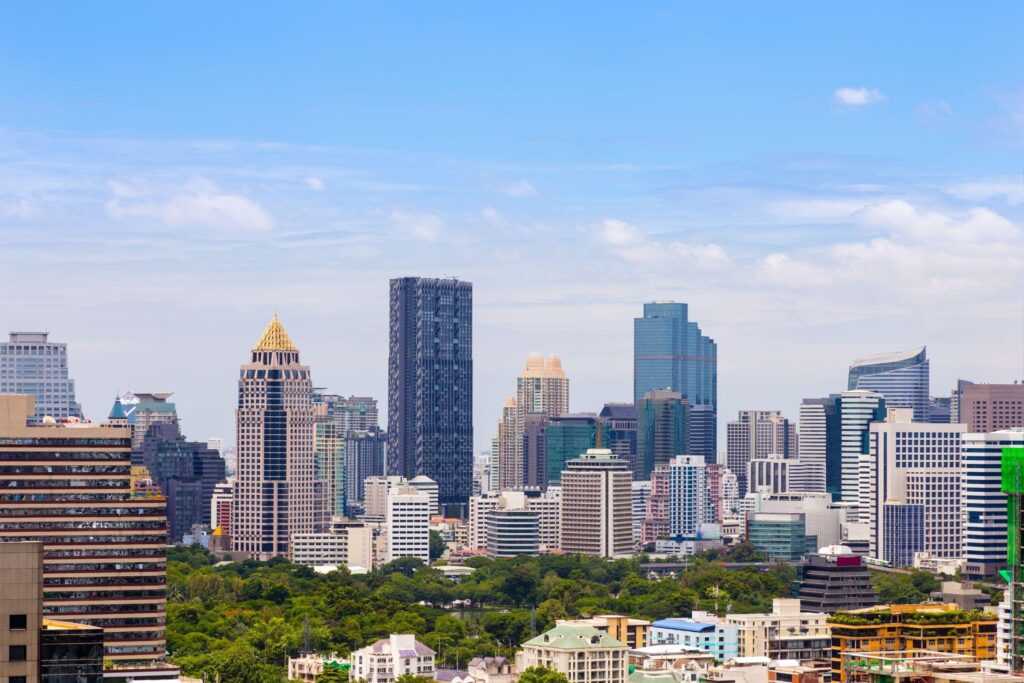
Thailand’s luxury property market is no longer a single story centered on Bangkok’s high-rises. Increasingly, serious buyers are thinking in terms of a portfolio spread across the country’s distinct luxury destinations — Bangkok for liquidity and connectivity, Phuket for lifestyle and rental yield, and inland retreats like Khao Yai for privacy and proximity to the capital. Understanding what each market actually offers is the difference between buying “in Thailand” and buying the right property for a specific purpose.
Phuket: Where Villas Have Overtaken Condos
Phuket remains Thailand’s most internationally recognized luxury destination, but the composition of demand has shifted meaningfully. Villa sales on the island rose by 12.9% in 2025, even as condo demand softened, reflecting a clear move among affluent buyers toward larger homes offering more privacy and long-term value. Knight Frank Thailand has noted that luxury villas now consistently outperform condominiums as international purchasers prioritize lifestyle over pure investment logic.
Pricing spans a wide range depending on location and specification: luxury villas typically run from around THB 20 million up to THB 300 million or more, with the most active segment sitting between THB 25–60 million for premium four- and five-bedroom pool villas in areas like Bang Tao, Kamala, Surin, and Layan. At the ultra-premium end, newer zones like Natai — where development remains deliberately limited — are increasingly positioned as the island’s next scarcity-driven luxury micro-market. Villa price growth in these select west-coast areas has run as high as 10–12% annually, well ahead of the island’s broader condominium market.
Foreign demand continues to anchor the market, with buyers coming primarily from Russia, China, Europe, India, and the Middle East, active across holiday homes, rental investments, and long-term residential purchases. Occupancy for well-managed premium villas in the THB 30–80 million range has remained strong enough to make the rental yield case compelling alongside the lifestyle appeal — a rare combination in global luxury real estate, where prestige addresses often come at the cost of investment return.
Khao Yai: The Second-Home Market Closest to Bangkok
For Bangkok-based buyers specifically, Khao Yai occupies a different niche entirely. Roughly 200 kilometres from the capital and bordering Khao Yai National Park — a UNESCO World Heritage Site — the area has built a long-running identity as a weekend and retirement retreat for affluent Bangkokians, supported by cooler highland weather, established wineries, golf courses, and a growing base of resort-style villa developments. Global hospitality brands have taken notice: Banyan Tree’s Creston Hill development near the national park combines luxury pool villas and branded condominiums on a lake-fronted site, reinforcing Khao Yai’s positioning as a legitimate branded-residence destination rather than a purely domestic getaway market.
What distinguishes Khao Yai from Phuket is the buyer’s underlying motivation. Where Phuket buyers are often weighing rental yield and tourism-driven income alongside lifestyle, Khao Yai buyers are typically purchasing a second or third residence purely for personal use and privacy — proximity to Bangkok matters more than rental income potential, and land scarcity near the most desirable stretches continues to support steady price appreciation over time.
The Eastern Economic Corridor: A Different Kind of Opportunity
The Eastern Economic Corridor — spanning Chonburi, Rayong, and Chachoengsao — represents a structurally different opportunity within Thailand’s broader luxury property landscape. Rather than being driven primarily by lifestyle or tourism, EEC-linked residential demand is tied to the region’s transformation into an industrial and technology hub, backed by substantial government investment and rising Board of Investment project approvals that are drawing a growing base of expatriate professionals, particularly from Japan, China, and South Korea. Residential developments in gateway cities like Sri Racha have increasingly targeted this employment-driven demand rather than the second-home buyer typical of Phuket or Khao Yai — making the EEC a market defined more by corporate and relocation demand than resort appeal.
Why Diversification Across Markets Makes Sense
The common thread across Thailand’s luxury property landscape is that no single market serves every buyer’s objective equally well. Bangkok offers the strongest resale liquidity and year-round rental depth, anchored by long-stay expatriates and corporate tenants. Phuket delivers the strongest combination of lifestyle appeal and tourism-driven yield, but with rental performance tied more closely to travel cycles. Khao Yai provides privacy and proximity for a specifically Bangkok-oriented buyer with less emphasis on income generation. And the EEC offers exposure to Thailand’s industrial growth story, appealing to a buyer thinking more like an infrastructure investor than a lifestyle purchaser.
For UHNW buyers building a genuine footprint in Thailand rather than a single opportunistic purchase, this is increasingly the more sophisticated approach: treating the country’s luxury markets as complementary rather than competing, and matching each acquisition to a specific purpose — income, privacy, legacy, or long-term capital preservation — rather than assuming one property type or location can serve all of them at once.
Finding the Right Fit Across Markets
Executing that kind of multi-market strategy requires an advisor who genuinely understands the distinctions between Bangkok’s condominium liquidity, Phuket’s villa economics, Khao Yai’s second-home dynamics, and the EEC’s employment-driven demand — rather than a generalist pushing whatever inventory happens to be available. TYT Asset works across all four of these markets, with access to off-market and pre-launch opportunities for buyers structuring a deliberate, advisory-led approach to luxury property in Thailand.
Thailand’s luxury property story has outgrown any single skyline. For buyers willing to look beyond Bangkok, the more interesting opportunities are often exactly where the crowd isn’t looking.