
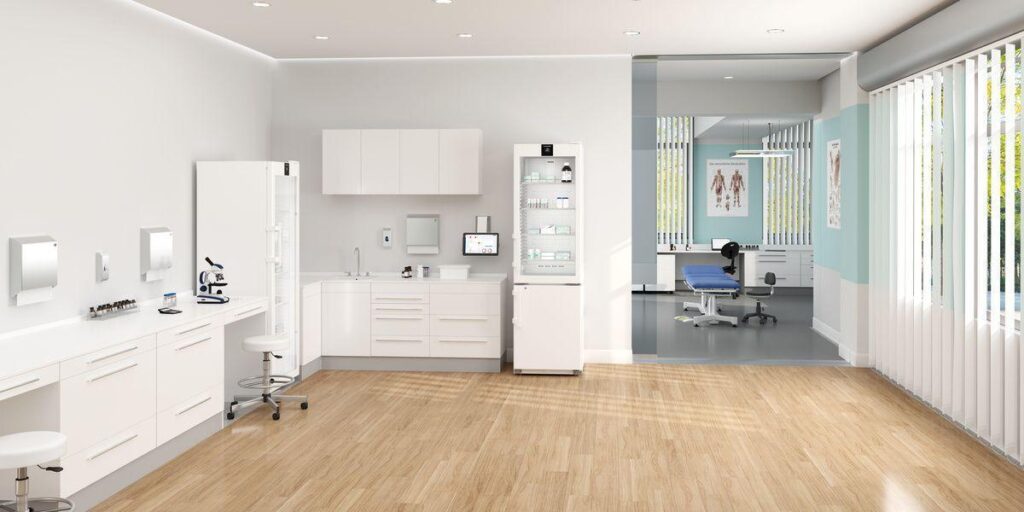
Most people assume that as long as a medication or supplement feels cold to the touch, it is being stored correctly. In reality, a household fridge cycles through temperature swings all day, and many products never notice the difference until their potency has already dropped. This is where the idea of a medication storage refrigerator becomes relevant: a unit built specifically to hold a narrow temperature band instead of the wide, fluctuating range a kitchen appliance tolerates. For most everyday items that tolerance is harmless. For temperature-sensitive medications, biologics, or diagnostic samples, it can quietly undermine the product long before anyone notices a visible change. Understanding where the line sits between casual home storage and properly controlled cold storage helps explain why some products need more than a shelf in the door.
TL;DR — Key Takeaways
Why Temperature Stability Matters for Health Products
Temperature-sensitive medications and health products are formulated to remain stable within a defined range, and stepping outside that range even briefly can start a slow process of degradation. Many compounds, particularly proteins used in biologic drugs, are held together by weak molecular bonds that respond to heat and cold cycling. Repeated warming and cooling, rather than a single extreme event, is often what does the damage, because each cycle stresses the molecule a little further.
A household refrigerator is not built with this in mind. Every time the door opens, warm air rushes in and the compressor has to work to bring the internal temperature back down, creating a swing rather than a steady line. Defrost cycles add another layer of variation, since many fridges briefly raise the internal temperature on a set schedule to clear frost from the cooling coils. For milk or leftovers, this is irrelevant. For a vial of insulin sitting near the front of a shelf, it means the product spends part of every day drifting outside its intended range without anyone realizing it.
The narrower a product’s safe range, the more this matters. Some medications tolerate a wider window and shrug off minor fluctuations, while others are formulated with almost no margin for error. Knowing which category a given product falls into is less important for the purposes of this discussion than recognizing the underlying mechanism: stability depends on consistency, not just on staying “cold enough” in a general sense.
Common Mistakes in Home Cold Storage
The most common storage error is placing sensitive items in the door compartments, precisely because the door is the least stable part of any refrigerator. Every opening exposes that space directly to room-temperature air, and the shelves there sit furthest from the cooling source, so temperatures in the door can run several degrees warmer and swing more widely than the interior shelves.
Overpacking creates a second, less obvious problem. A fridge relies on air circulating freely around its internal fan or vents to distribute cold air evenly. When shelves are crammed with containers, bottles, and produce, that airflow gets blocked, and pockets of warmer air can form even while the thermostat reads a normal temperature. The result is uneven cooling that varies depending on exactly where an item sits, not just what the display shows.
A few adjustments reduce these risks without requiring new equipment:
None of these habits fully replicate the stability of purpose-built cold storage, but they narrow the gap considerably for everyday household use.
When Storage Needs Become Clinical or Regulated
Home storage habits stop being sufficient once the product being stored carries consequences beyond a single household, which is exactly the situation clinics, pharmacies, and laboratories are built around. In these settings, refrigerated storage is not just about keeping something cold; it is about proving, on demand, that it stayed within range continuously. Regulatory oversight in these environments typically expects documented storage conditions, a traceable temperature history, and a way to demonstrate that no gap in monitoring went unnoticed, whether the space involved is a small pharmacy back room or a full diagnostic laboratory.
That documentation requirement changes what the storage equipment itself needs to do. A household fridge has no way to log its internal temperature over time or alert anyone if a door was left open overnight. Equipment such as a dedicated lab fridge freezer is designed around that gap: consistent cooling performance paired with monitoring and alarm functions that flag deviations before they become a problem, rather than after a sample or medication has already been compromised. The emphasis shifts from simply keeping contents cold to maintaining a verifiable, continuous record of the conditions those contents experienced.
The difference also shows up in day-to-day handling. A busy clinical or laboratory setting needs storage that staff can access repeatedly throughout a shift without introducing the kind of temperature swings a home fridge would tolerate. Designs intended for this use tend to favor tighter door seals, more predictable recovery after opening, and interior layouts that keep circulation even across every shelf, since a single inconsistent zone could mean the difference between a valid sample and a discarded one. This is the point where general refrigeration and regulated cold storage stop being the same category of appliance, even though both technically keep their contents cold.
Practical Habits for Safer Storage at Home
Improving home storage does not require replacing an entire kitchen fridge, but it does require a bit more attention than most households give it. The simplest and most revealing step is checking the actual internal temperature with a standalone thermometer placed on the shelf where sensitive items sit, rather than trusting the fridge’s own display, which usually reflects an average rather than the conditions at any single point. Spot-checking at different times of day, including right after the door has been opened and closed several times during meal preparation, often reveals swings that a quick glance would never catch.
Grouping items by sensitivity also helps. Keeping medications, supplements, and any temperature-sensitive health products together on one shelf, away from vents and away from the door, means they experience a more predictable environment than food that gets moved and repositioned constantly. It also makes it easier to notice quickly if something looks or seems different, since the group is checked together rather than scattered throughout the fridge.
A short routine covers most of the practical ground:
These habits will not turn a kitchen appliance into a monitored storage system, but they meaningfully reduce the everyday inconsistencies that cause the most quiet degradation.
Frequently Asked Questions (FAQ)
Does a slightly warm fridge ruin medication immediately?
Not usually. Most stability loss from temperature exposure is gradual rather than instant, building up through repeated fluctuations rather than a single brief warm spell. That said, some products are far more sensitive than others, so a temporary temperature excursion is not something to dismiss automatically.
Is refrigeration for food safety the same as refrigeration for medication or sample integrity?
No. Food refrigeration is mainly about slowing bacterial growth to prevent illness from consumption. Storage for medications, biologics, or laboratory samples is about preserving the chemical or biological structure of the product itself, which can degrade well before it would ever pose a food-safety-style risk.
When should someone consider storage beyond a standard household fridge?
Once a household is managing multiple temperature-sensitive prescriptions, injectable biologics, or anything requiring documented proof of consistent storage conditions, a standard fridge shelf becomes a limiting factor rather than a convenience, since it was never designed to log or guarantee stability over time.