
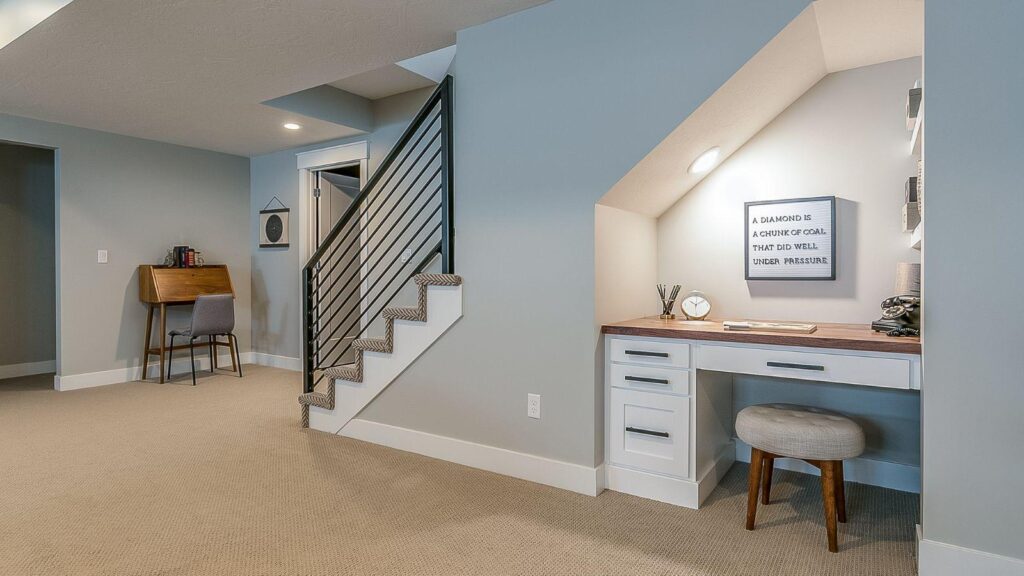
For most homeowners, the basement is the great underused frontier of the house, a dim, often chilly space relegated to storage boxes, a furnace, and whatever else has nowhere else to go. Yet beneath that clutter lies enormous potential. A finished basement can become a family room, a guest suite, a home office, a gym, a playroom, or almost anything else you need, adding genuinely usable square footage without the cost and disruption of building an addition. It may be the single best opportunity in your home to gain space you will actually use.
Transforming a basement well, though, involves more than throwing up some drywall and laying down carpet. It requires thoughtful planning and attention to the unique challenges below grade. Here is what is involved in finishing a basement and how to do it right.
Investing in complete basement finishing and renovation services is one of the most effective ways to expand your living space and get more out of your home. To make the most of the opportunity, it helps to understand both the possibilities and the practical considerations that come with finishing a basement.
The Appeal of Finishing a Basement
The biggest draw of a basement renovation is space. You already own the square footage; it is simply waiting to be made livable. Compared to building an addition, finishing a basement is often a more cost-effective way to expand, since the structure, walls, and roof are already in place. You are unlocking potential rather than building from scratch.
That new space is also wonderfully flexible. A finished basement can serve almost any purpose your household needs, and those needs often evolve over time. What begins as a playroom can later become a teen hangout, a home office, or a guest suite. This adaptability is part of what makes a basement renovation such a smart, lasting investment in how your home functions.
Popular Ways to Use the Space
One of the most enjoyable parts of a basement project is deciding what to do with it. Common and rewarding uses include:
- Family or entertainment room. A comfortable space for movie nights, games, and gathering, often the most popular choice.
- Guest suite. A private bedroom and bathroom for visitors, adding real functionality and comfort.
- Home office. A quiet, separate workspace away from the busy main floors, ideal for remote work.
- Home gym. A dedicated fitness space that saves trips to the gym and uses the room efficiently.
- Secondary kitchen or living area. For multigenerational households or added everyday convenience.
The right choice depends on your lifestyle, and a good designer can help you weigh layout options to get the most from the space.
Moisture Control Comes First
Here is the consideration that separates a successful basement renovation from a disastrous one: moisture. Basements are below grade and naturally prone to dampness, humidity, and potential water intrusion. Before any finishing begins, it is essential to address waterproofing and moisture control, because finishing over a damp basement is a recipe for mould, damaged materials, and a ruined investment.
A proper basement renovation starts by ensuring the space is dry and protected, through appropriate waterproofing, drainage, and moisture management. Skipping this step to save time or money is the most costly mistake a homeowner can make below grade. Getting the moisture situation right first is the foundation, literally and figuratively, of everything that follows.
Insulation, Comfort, and Systems
Basements are notoriously cold, so proper insulation is key to making the space genuinely comfortable and usable year-round. Good insulation, combined with appropriate heating and ventilation, transforms a chilly cellar into a warm, inviting room that feels like a true part of the home rather than an afterthought.
Finishing a basement also involves the systems that make a space livable: electrical wiring, lighting, and sometimes plumbing for a bathroom or kitchenette. Because basements often have lower ceilings and existing mechanical systems to work around, thoughtful planning of layout, lighting, and these systems is what makes the finished space feel bright, comfortable, and functional rather than cramped and dim.
A Strong Return on Investment
Beyond the everyday enjoyment, a finished basement can be a sound financial move. According to the National Association of Realtors and the remodeling industry, converting a basement to a living area ranks among the top interior remodels for return on investment, recouping an estimated 86 percent of the project cost at resale. That places it ahead of many other popular projects, making basement finishing attractive both for the years you enjoy the space and for its appeal to future buyers.
It is worth remembering that the exact value depends on quality, location, and how the space is used, and below-grade square footage is often valued differently than above-grade space. Still, as a way to gain usable living area at a reasonable cost, a well-finished basement consistently proves itself one of the smarter renovation investments a homeowner can make.
Permits and Doing It Properly
Finishing a basement typically requires permits and must comply with local building codes, particularly when adding bedrooms, bathrooms, or electrical and plumbing work. Proper permits ensure the work is safe, legal, and properly documented, which matters both for your safety and when it comes time to sell. Reputable contractors handle this as a matter of course.
Skipping permits to cut corners is a false economy. Unpermitted work can create safety hazards, fail inspections, and become a red flag for buyers that derails a sale. Doing the project properly, with the right permits and code compliance, protects your investment and gives you confidence that your new space is built to last and to standard.
Why Professional Help Pays Off
Given the moisture challenges, system requirements, and code considerations, basement finishing is a project that rewards professional expertise. Experienced renovators know how to address waterproofing, insulation, and layout in ways that maximize comfort and avoid the pitfalls that trip up DIY attempts. They bring the skills and coordination to turn a complex space into a polished result.
A full-service team can handle the entire project, from design and layout through waterproofing, systems, and finishes, ensuring everything works together and meets code. That single-source approach removes the burden of coordinating the many trades a basement involves and gives you a finished space you can enjoy with confidence. For a project with this many moving parts, professional guidance is well worth it.
The Takeaway
A finished basement is one of the best opportunities a home offers: a chance to gain flexible, usable living space at a reasonable cost while adding lasting value. Doing it well means starting with moisture control and waterproofing, addressing insulation and systems for comfort, planning the layout thoughtfully, and handling permits and code properly. Get those fundamentals right, ideally with experienced professional help, and your once-neglected basement can become one of the most enjoyed and valuable spaces in your home, ready to serve whatever your household needs for years to come.